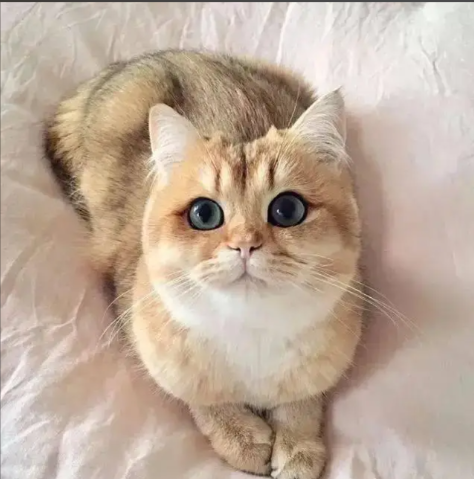
Why does my cat suddenly bite me after I’ve petted it until I’m happy?
Petting aggression can also have other causes.
1.Petting Aggression
This is an aggressive behavior triggered by affectionate touches or pats. When a cat becomes “impatient” of being petted or licked, it will gently bite to signal the other cat to stop.
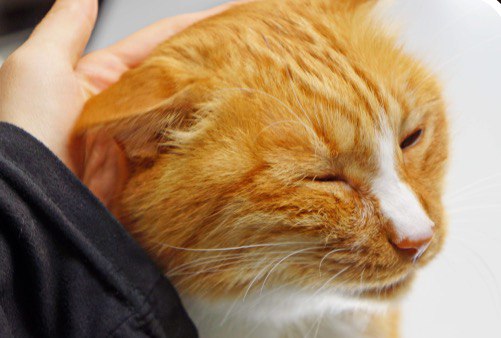
Kittens that lack socialization in their early years (before 9 weeks old) and have no interaction with other kittens or humans have a lower touch threshold than other cats:
● What other kittens can pet for ten minutes, they get annoyed in just two minutes…
● And because of the lack of interaction, when other kittens get impatient, they will quietly leave or gently nip, and these kittens won’t be able to control their strength, leaving teeth marks with each bite…
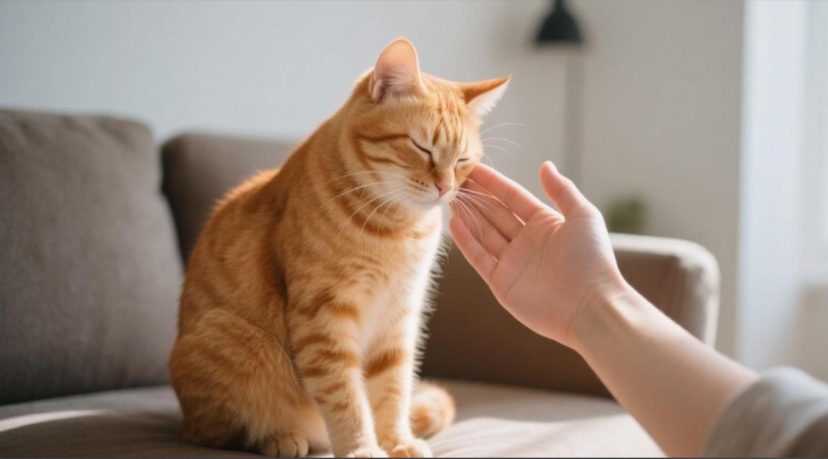
2.Physical Pain
If a cat has pain (skin, abdomen, joints, teeth) or other metabolic disorders, it may become more irritable. When the area of pain is touched, the cat’s self-protective mechanism will also make it more alert.
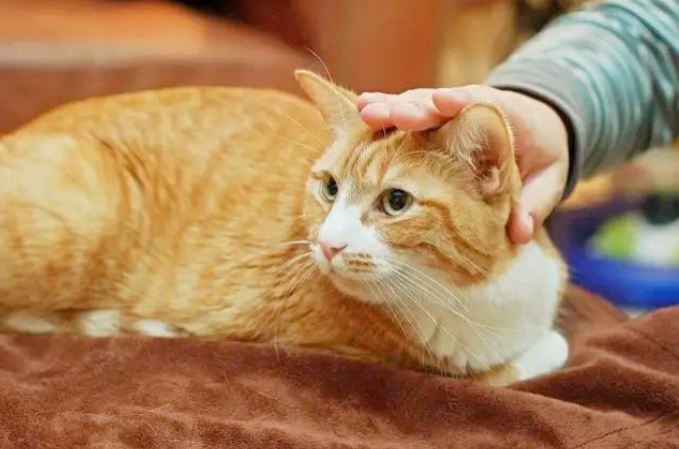
3.Strong Desire for Control
In a cat society, once a hierarchy has evolved, the “alpha cat” typically grooms the “junior cats” to cover their own scent with saliva.
If a cat (perceives) as the dominant member of the household, it may not be comfortable with prolonged petting, grooming, or licking (cat-to-cat), and may use gentle bites to command you to stop.
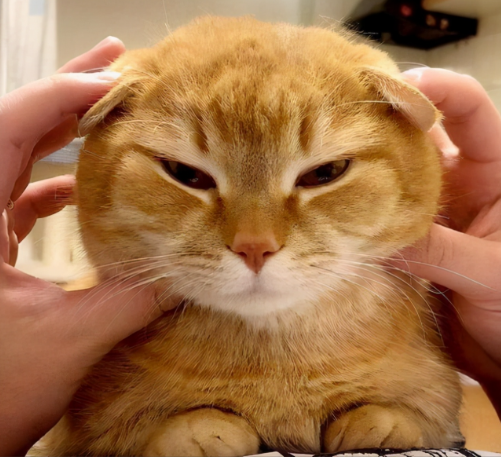
Can I force-pet my cat to get used to it?
Every time I pet my cat, I wait until it gets angry and bites me before putting it down… Will repeatedly forcibly petting the cat like this help it gradually get used to it?
No! It will only strengthen the cat’s “conditioned reflex” to bite.
In the cat’s eyes, this means: as long as I bite this person, they will immediately let go of me and give me freedom. After repeating this many times, the cat will think that “biting” is a good method and will develop a biting habit.
Correct Approach
▌ Stop immediately if your cat shows signs of impatience. These include signs such as flattened ears, licking its nose, increased tail swishing, and strained hind leg muscles.
▌ Don’t directly pick it up from your lap. Instead, use toys or food to lure it off your lap, encouraging it to jump down willingly. Guide your cat to get off on its own.
▌ Strictly control the duration of each petting session, but increase the frequency of petting throughout the day.
▌ After each petting session, reward the cat with a small treat.
▌ Varyize the petting areas and methods to find out each cat’s preferred areas to pet.
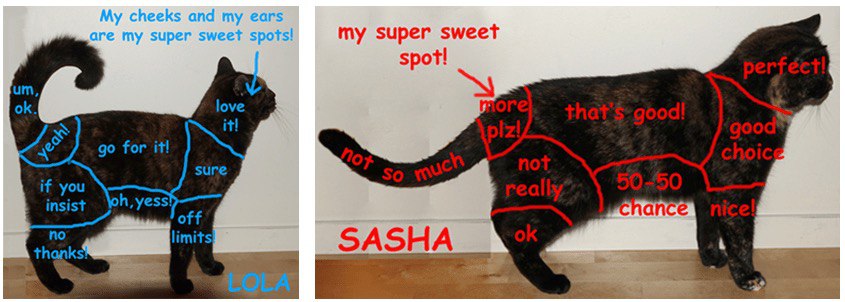
Some cats are genuinely averse to being held and petted… If you encounter a kitten like this, don’t force it.
There are many ways to interact with them; just accept them as they are.